We measure what we do and we investigate the science behind it — from health-education outcomes in the field to laboratory research on skin disease. Our work spans two areas so far.
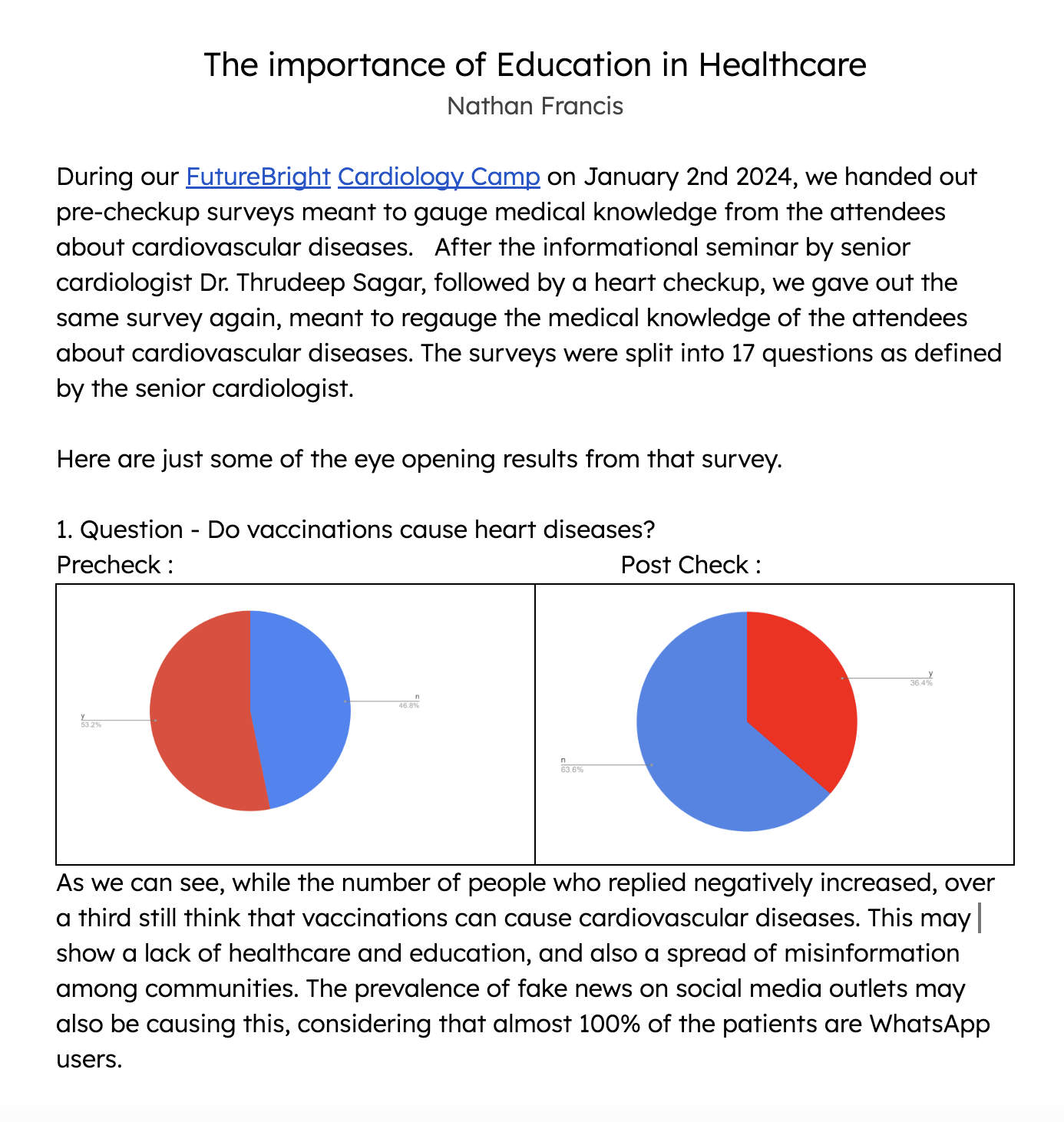
Health education is only worth doing if it sticks. So at our January 2024 cardiology camp, every attendee took the same 17-question survey — designed by senior cardiologist Dr. Thrudeep Sagar — before and after his seminar. Comparing the two shows, question by question, exactly what a single session moved, and what it didn't.
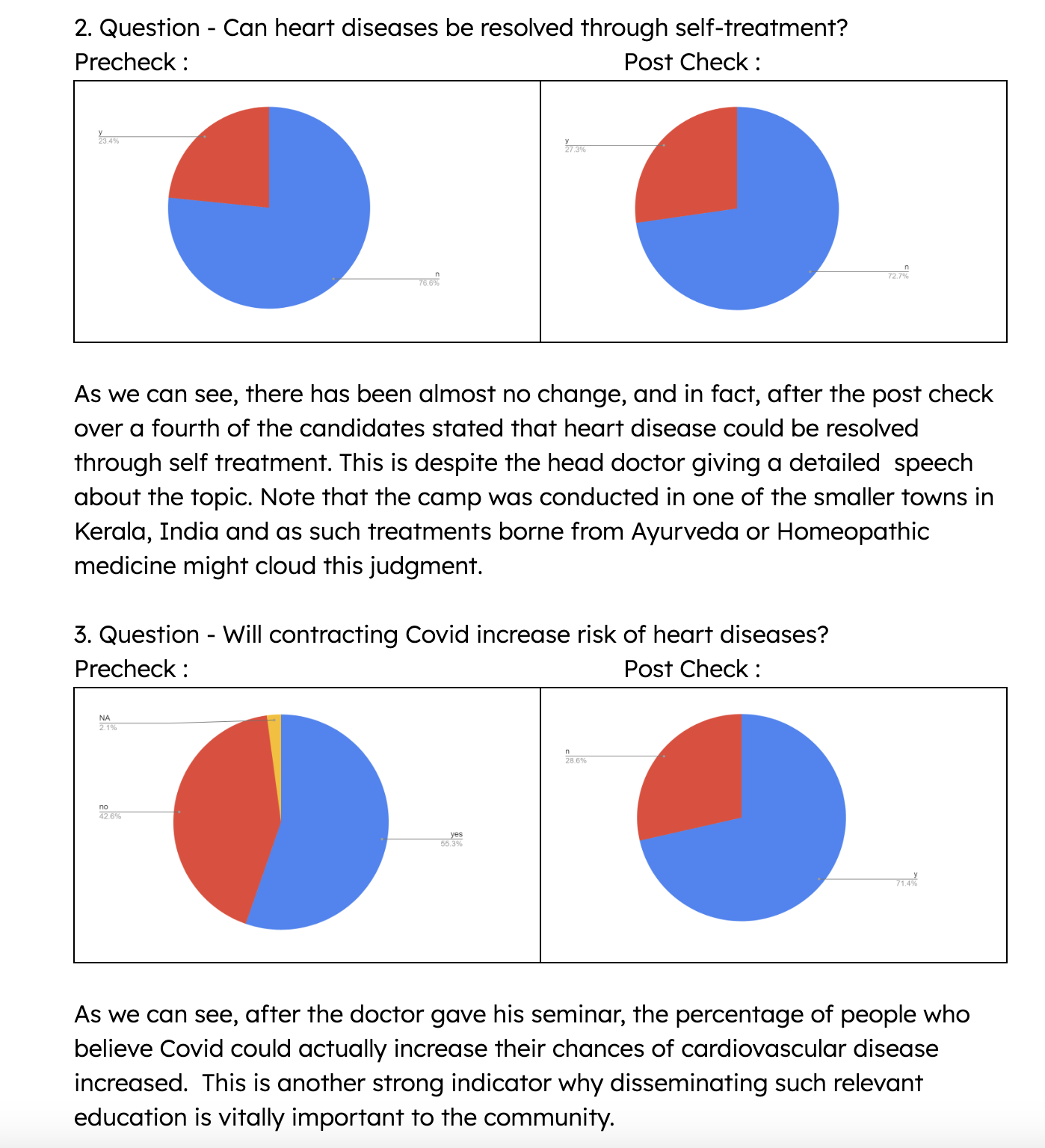
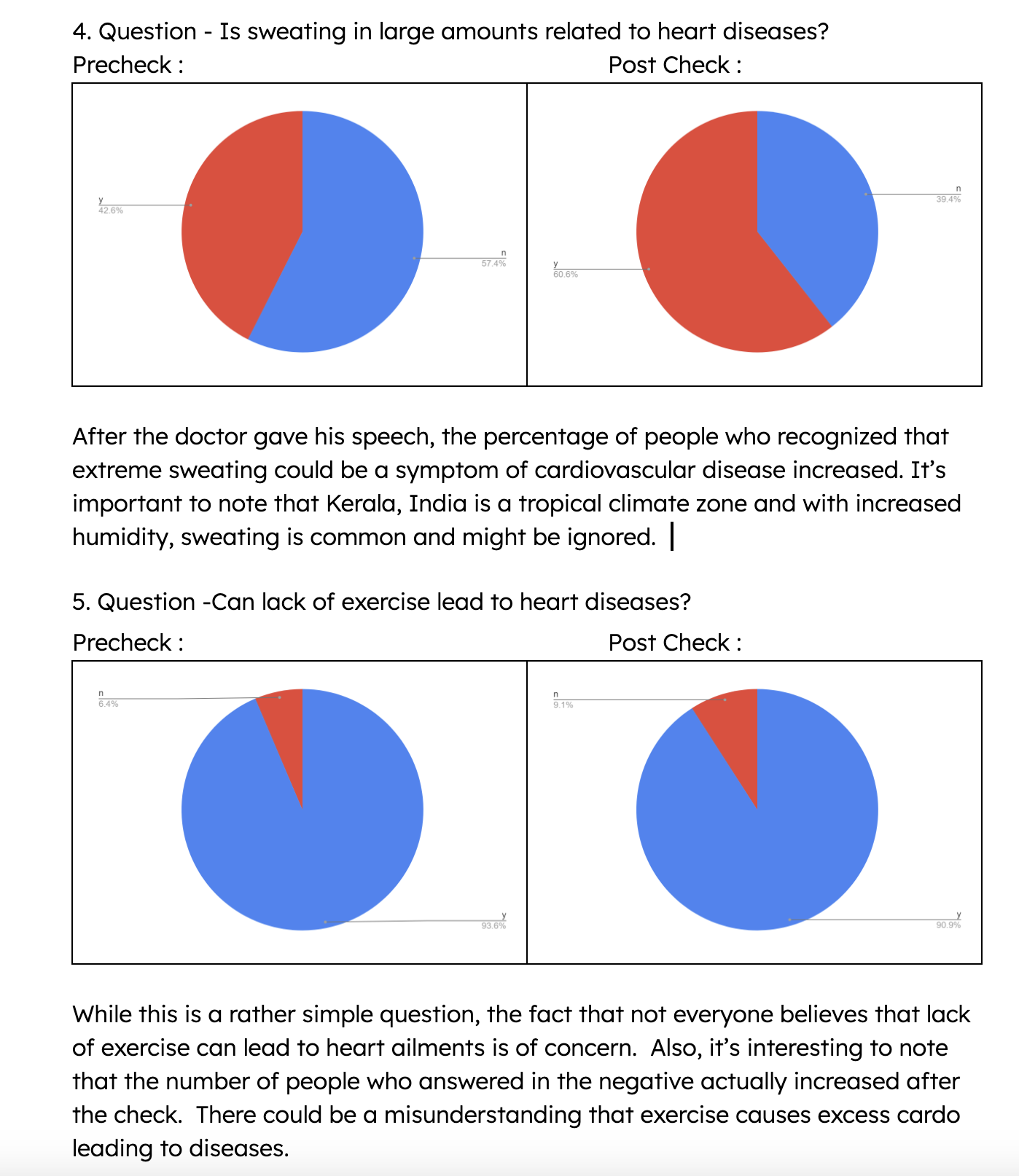
Method: ~150 attendees completed the identical 17-question survey immediately before and after the seminar at our January 2024 cardiology camp in Kerala, India. Bars show the share answering “yes” to each question.
The wins were real — and so were the limits. Recognition that COVID and heavy sweating relate to heart disease jumped roughly 16–18 points, and the vaccine myth fell sharply. But belief that heart disease can be self-treated actually rose, and near-universal agreement on exercise slipped slightly.
We publish the misses on purpose. They show that one talk isn't enough to undo deep-rooted beliefs — the strongest possible argument for sustained health education, not one-off events. That's the finding that shapes how we design the next camp.
“The Importance of Education in Healthcare,” by founder Nathan Francis — the full analysis with every question's pre/post breakdown:
Alongside our fieldwork, founder Nathan Francis conducts laboratory and literature research on atopic dermatitis (eczema) — a condition affecting tens of millions of children worldwide. These studies aim to make eczema treatment safer and to build better tools for testing new therapies.
Eczema is driven in part by ceramide deficiency, which weakens the skin barrier. This preliminary study tested whether ceramide-transport-deficient fruit flies can stand in for human skin in eczema research. Across five trials, mutant flies showed compromised barrier integrity in ~70% of cases versus ~10% in controls — a sevenfold difference — suggesting fruit flies could offer a low-risk, ethical model for testing dermatological treatments before mammalian trials.
Read the study (PDF) →Topical corticosteroids are the first-line treatment for eczema flares, but their long-term safety in children is poorly understood. This review synthesizes clinical trials, systematic reviews, and observational studies to examine both local effects (skin atrophy, perioral dermatitis) and systemic risks (adrenal-axis suppression, growth delay), and highlights how limited long-term evidence complicates care — with the goal of informing safer treatment strategies for children who need ongoing eczema management.
Read the review (PDF) → FutureBright